DESIGN THAT
WORKS FOR YOU
Karma Web Wizards creates high-performing websites that combine strategic design, user experience, and digital marketing to help businesses attract more visitors, improve engagement, and generate measurable business growth. Every website is built with long-term performance, scalability, and conversion in mind.
Create the right impression for your business
A good website used to be a nice-to-have. Today, for most businesses, it’s the first real conversation a customer has with you, before they ever call, message, or walk through the door.
That conversation happens fast. Research on first impressions has found that people form an opinion about a website in a fraction of a second, long before they’ve read a single word. If that first impression feels slow, cluttered, or dated, most visitors won’t stay to find out whether your business is actually excellent.
This doesn’t mean your website needs to be flashy. It means it needs to load quickly, explain what you do clearly, and give someone a reason to trust you within seconds, not paragraphs.
At Karma Web Wizards, we treat your website as the foundation of everything else we do, SEO, AI search visibility, and advertising all send people to it. If that foundation is weak, everything built on top of it works harder than it should.
A good website doesn’t just look right. It earns trust before anyone reads a word.
Most business owners assume a website problem is a design problem. Usually, it’s a trust problem wearing a design costume.
A slow-loading page doesn’t just frustrate visitors, it actively tells them the business behind it might be careless in other ways too. A confusing layout doesn’t just look outdated, it makes someone work harder to trust you than they’re willing to.
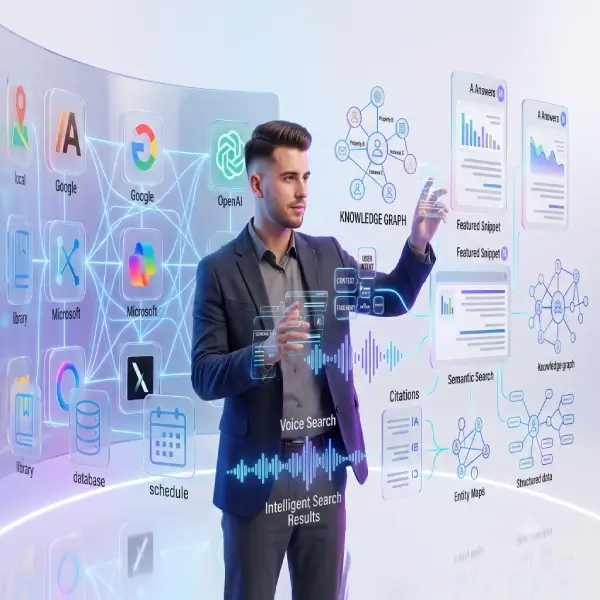
And increasingly, your website isn’t only being judged by people. Google and AI tools like ChatGPT and Perplexity read your website’s structure and speed to decide whether your business is credible enough to recommend. A website that struggles to earn a customer’s trust usually struggles to earn an AI system’s confidence too, for the same underlying reasons.
None of this is about chasing trends. It’s about removing the small frictions, slow load times, confusing navigation, unclear messaging, that quietly cost businesses customers they never even knew they lost.
Picture two shopfronts on the same street, selling similar things.
One has a hand-written sign taped to the window, mismatched fonts, and a display that hasn’t been tidied in months. It might be an excellent shop. But a passer-by deciding in three seconds whether to walk in has no way of knowing that yet.
The other has a clean, well-lit window. The products are arranged with intention. The signage is easy to read from across the street. Before anyone has spoken to a single staff member, that shop has already signalled: we take care of things here.
Your website is that shopfront, except it’s open every hour of every day, and far more people walk past it than ever walk down your actual street.
Nobody blames the products for a messy window. But they rarely stop to find out either.
Design is more than just good-looking webpages, mind-blowing images, flashy animations and intriguing typography. Good design is a design that does a good job of conveying information in a way that’s easy to find, user-friendly, easy to understand and easy to convert.
That means fast loading, especially on mobile, where most visitors now arrive first. It means a clear structure that answers the questions customers actually have, not just an attractive layout with vague headlines. It means a technical foundation solid enough that Google, and increasingly AI search tools, can read and trust your site too.
Good design isn’t decoration. It’s the difference between a visitor understanding you in five seconds and giving up in three.
A beautiful website that loads slowly, confuses visitors, or breaks on a phone isn’t good design. It’s a good-looking problem. As we’ve long believed: no matter how pretty a website is, it’s nothing without strong character underneath it.
Business owners don’t invest in a new website because the old one looks tired. They invest because they want more of the right enquiries, and fewer visitors quietly leaving before they ever get in touch.
Every other channel works harder when the website works. SEO, AI search visibility, and advertising all send people to your website. If it doesn’t convert once they arrive, you’re paying to lose the same visitor repeatedly.
First impressions compound. A visitor who trusts you in the first few seconds reads more, believes more, and is more likely to make contact. A visitor who doesn’t, rarely gives you a second chance.
A stronger technical foundation supports everything else. Page speed, mobile performance, and clear structure aren’t just user experience details, they’re exactly what search engines and AI systems evaluate too.
Good design ages better. A site built on solid foundations can be updated and extended for years. One built quickly, without those foundations, often needs replacing sooner than expected.
We don’t see website design as one big project with a finish line. Everything we build rests on three foundations.
The technical groundwork: fast loading, mobile-first, secure, and built to be read clearly by both people and the search engines and AI tools evaluating it. Nothing else matters if this isn’t solid.
Clear navigation, logical page hierarchy, and content organised around the questions your customers actually ask, not just what looks impressive to you.
A website built to be extended, not rebuilt from scratch every time your business changes. New pages, new services, new integrations should be additions, not renovations.
When all three hold, your website keeps earning trust long after launch day. When one is missing, the cracks tend to show at the worst possible time.
Every business needs something different from its website, so we don’t start with a template. Depending on where you’re starting from, our work can include:
A website isn’t a project you finish. It’s a foundation you keep building on.
AI website builders have improved a great deal, and for a simple one-page site to test an idea quickly, they can be a genuinely sensible starting point. We’re not going to pretend otherwise.
But there’s a real difference between a website that looks fine on the surface and one that’s genuinely safe, fast, and built to last, especially once it’s handling real customer enquiries or personal information.
Independent security research has found that a large share of AI-generated code carries at least one exploitable flaw, in one recent study, as much as 98% of AI-generated applications contained a security weakness, and roughly 45% of AI-generated code included a vulnerability serious enough to be exploited.
For a small business, a security incident isn’t a minor inconvenience. Industry research puts the average cost of a small business data breach between US$120,000 and over US$1 million once downtime, lost customers, and recovery work are included, and more than half of small businesses that suffer a serious cyberattack don’t reopen within six months.
There’s a quieter risk too. A site built quickly, without an experienced developer reviewing what’s underneath, often needs to be rebuilt within a year or two anyway, once it can’t support growth, a new integration, or the technical foundations that modern SEO and AI search now require. What felt like a saving upfront becomes a second, usually more expensive, project later, and this time there’s existing content, existing rankings, and existing customers who can’t be disrupted along the way.
None of this means AI tools are bad. They’re often a sensible way to test an idea fast. It means a business’s real website, the one carrying its reputation, its enquiries, and its customers’ information, deserves an experienced person taking responsibility for what’s actually happening underneath the page.
There are thousands of businesses offering website design. Many promise a beautiful result. Few promise to explain honestly whether you actually need one.
This isn’t a new approach for us. It’s the same practice built over 15+ years, first in Australia, now based in Dubai, including an 11-year, ongoing relationship with one client that began with exactly this kind of website work, and enterprise-level technical work for Versa Networks, a global cybersecurity and networking company.
We don’t just build websites. We build the foundation everything else stands on.
Design trends will keep changing. Templates will come and go. Five years from now, websites will look different again, and the tools used to build them almost certainly will too.
But the underlying job of a website, earning a stranger’s trust quickly enough that they choose to stay, has never changed, and won’t.
Technology will continue to change. Trust never will.
We have been using Karma Web for 12 months now. In that time I have found Jignesh great to deal with and constantly improving and helping our business grow.

Justin Oakes, A1 Windscreens
I met and engaged with Jignesh since Aug 2014 and since then I have been engaged him for website development ,seo and online marketing. I have found his consistent efforts both productive and reassuring as we work towards the future. He is prepared to research the industry which he had little knowledge to ensure that he come up to speed. With his new gained knowledge he was able to efficitently promote our business and our website.He was able to keep us on the first page on Google throughout the entire period.He also research avenues which would help us to ensure the survival of our business in the future. Were i not retiring, I would be keeping Karma Karma Web Wizards for my online marketing and webste design services.

John Ellem, Ellems Centravac
When you sign up with Karma Web Wizards be prepared to gain a friend as well as a personalised service. No request is out of reach. Jignesh and his team will work effortlessly improving your site and climbing it up the google foodchain leaving out all the jargon normal people don’t need to to know. You will be involved with the evolution of your new site.

Diane Lupi, Ace Convertibles
We have had the pleasure to work in partnership with Karma Web Wizards over the last 3 years. Prior to our venture, we were relying on old school advertising. We weren’t tech savvy as such.At first, we were skeptical with the transition ( digital presence ) . With the right strategies and implementation, from website design to SEO we have experienced steady growth increase of 40% during the journey . We appreciate the time, effort and honesty Jignesh delivers at all times .We have formed a strong & respectful partnership.

George Gouzanis, AAA Security Doors
If your website has been quietly costing you customers, that’s a fixable problem, not a life sentence.
If you’d like an honest look at what’s actually happening on your site today, we’re glad to have that conversation: no pressure, no sales script, just a clear view of where you stand.
Technology will continue to change. Trust never will.